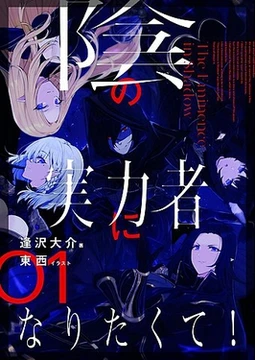
Church Leader
A robed authority standing at the crossroads of faith, politics, and the world's hidden currents.

The Church Leader is a representative of the religious/faith-based faction that operates within the broader political landscape of The Eminence in Shadow's world. As the head of this ecclesiastical organization, the role carries significant social and spiritual authority, positioning the Church as one of the established power structures alongside secular governments and the hidden organizations that shape the world's true history.
In the narrative, the Church Leader functions primarily as an institutional figure rather than a personal antagonist or ally to Cid Kageyama. Their significance lies in representing the organized religious establishment and the way faith-based authority intersects with the larger conflict between shadow and light that defines the series' world.
- Character
- Church Leader
- Role
- Head of the religious/Church faction
- Affiliation
- Church (ecclesiastical organization)
- Status
- Institutional authority figure
Lore & Background
In the world of The Eminence in Shadow, organized religion occupies a distinct tier of societal power. The Church, under the stewardship of its Leader, serves as a moral and spiritual counterweight to the various political bodies and the shadowed organizations that operate beneath the surface of daily life. The Church Leader embodies this institutional role, representing centuries of accumulated doctrine, ritual, and social influence.
The religious faction's presence in the story underscores a recurring theme in the series: the gap between how institutions present themselves to the public and the complex realities of their internal power dynamics. While the Church projects an image of unified spiritual guidance, the broader narrative of The Eminence in Shadow is deeply concerned with hidden agendas, concealed identities, and the true nature of power—themes that apply to every faction, religious or otherwise.
The Church Leader's interactions with the wider world reflect the series' exploration of how established orders respond to forces they cannot fully comprehend. In a world where the true balance of power is shaped by figures like Cid Kageyama operating from the shadows, even the most visible institutions find their authority subtly challenged by forces they were never designed to address.
In Their Own Story
The candlelight in the great sanctuary flickered as the Church Leader ascended the narrow steps to the raised dais, the heavy hem of ceremonial robes pooling around their feet like dark water. Outside the stained glass, the city hummed with its ordinary evening—vendors packing stalls, children chasing each other through the market square—unaware that the prayers offered here would shape the week's edicts. The Leader raised a hand, and the assembled clergy fell silent. Somewhere far below the city's foundations, in a chamber no map had ever recorded, a young man in a shadowed cloak smiled and turned a page in a book that did not exist. The Church would hold. The world would turn. And the true architects of both would remain, as always, unseen.
Reader's Guide
The Church Leader serves as an institutional anchor in the story's broader political tapestry. Their role is less about personal drama and more about representing the weight of organized faith as a societal force. Personality-wise, the figure projects solemnity, measured authority, and an awareness of duty that transcends individual ambition.
Key relationships are defined by institutional hierarchy: the Leader speaks for the Church, answers to its internal councils, and navigates the expectations of the laity. In the wider world of The Eminence in Shadow, the Church occupies a visible position in contrast to the hidden organizations that truly move the plot.
The most important narrative gap here is one of perception. To the public, the Church Leader is a pillar of moral order. To the reader aware of Cid Kageyama's true identity and the Shadow Court's reach, the Church's authority is one layer in a far more complex web. The Leader may never know that the 'coincidences' shaping their congregation's safety are the work of a man who believes himself a fictional character.
First appearance: the Church and its leadership appear as part of the world-building establishing the political and spiritual landscape. The character does not undergo a major personal arc but functions as a constant against which the story's hidden machinations are measured. Their development is institutional rather than personal—the Church endures, adapts, and continues its work while the true story unfolds elsewhere, in the shadows.
Did You Know?
- The Church in The Eminence in Shadow represents one of the visible power structures in a world where the most influential forces operate entirely behind the scenes.
- The series' central irony—that Cid Kageyama believes he is a fictional character—means that even the Church's most significant 'miracles' may be the unacknowledged work of the Shadow.
- The religious faction's role highlights the series' recurring theme: the gap between public perception of authority and the hidden realities that actually shape events.
- Unlike the Seven Shadows, who have distinct personalities and personal arcs, the Church Leader is defined by their institutional role, making them a symbol of established order rather than an individual protagonist.
More in Characters
Elsewhere in the The Eminence in Shadow universe
Spotted an error? Know more?
This is a living reference — every entry is fact-audited, and reader corrections feed straight into our audit queue. Suggest an edit · See this site's audit record